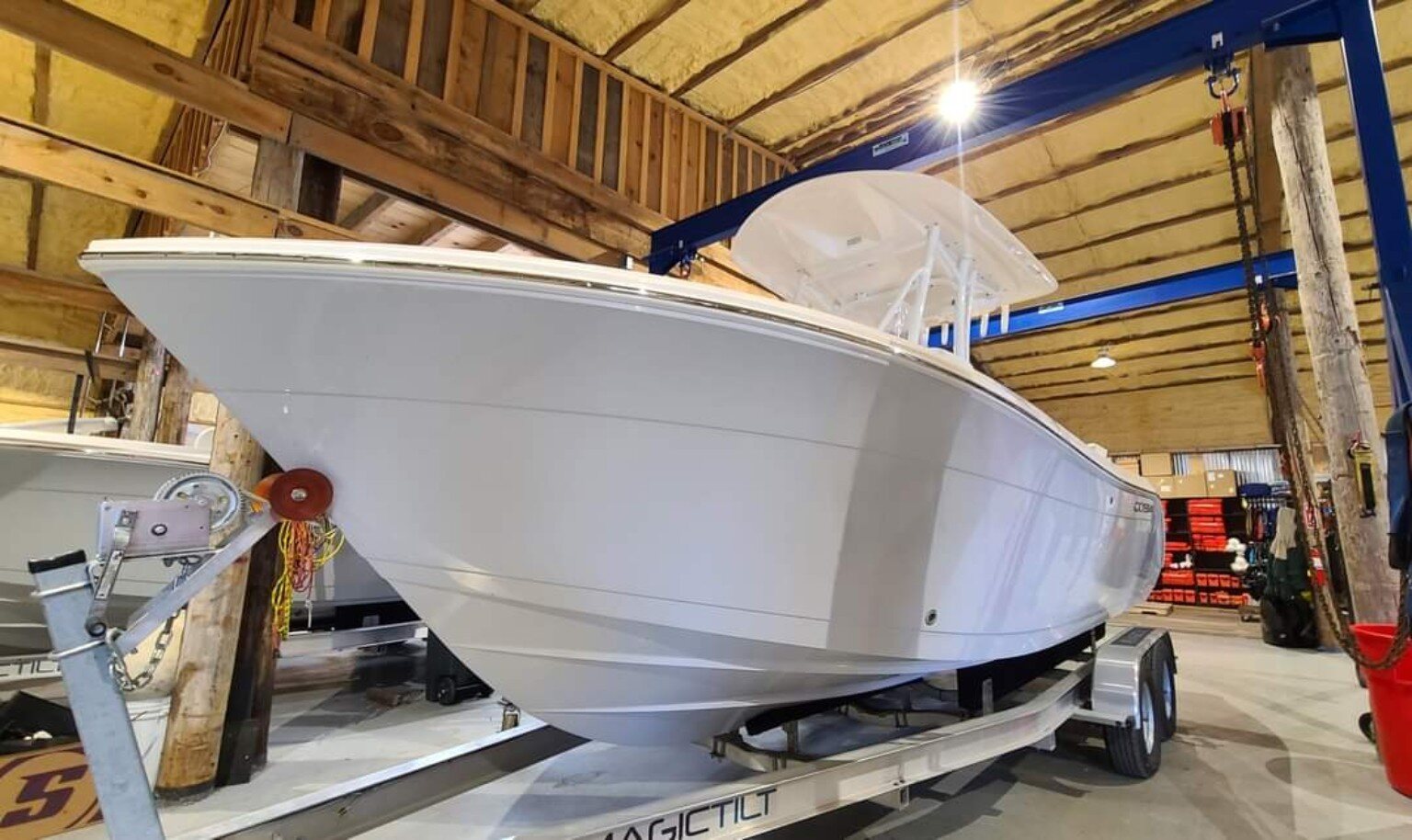
A dealer checkout begins when the boat arrives, not when the customer signs papers. The receiving inspection should document shipping condition, hull and gelcoat, upholstery, glass, hardware, compartments and included equipment. Damage or shortages are easier to resolve when they are photographed before rigging begins.
Rigging checks cover more than the engine. Technicians verify steering, controls, fuel and electrical connections, batteries, chargers, pumps, navigation lights, electronics, safety labels and fastener torque. The propeller, engine height and operating setup should match the hull and intended load rather than simply using whatever is convenient.
A water test confirms what a shop inspection cannot. The boat should start, shift and steer correctly; reach the proper engine operating range; maintain cooling and charging; and show normal gauge and electronic operation underway. Hatches, drains, livewells and bilge systems should be checked for leaks or unexpected water.
Delivery should include an owner orientation, serial-number and warranty records, maintenance expectations and an explanation of the controls and safety systems. A written checklist creates accountability and gives the customer a useful baseline for future service. New does not mean exempt from inspection—it means there is an opportunity to establish the boat correctly from day one.