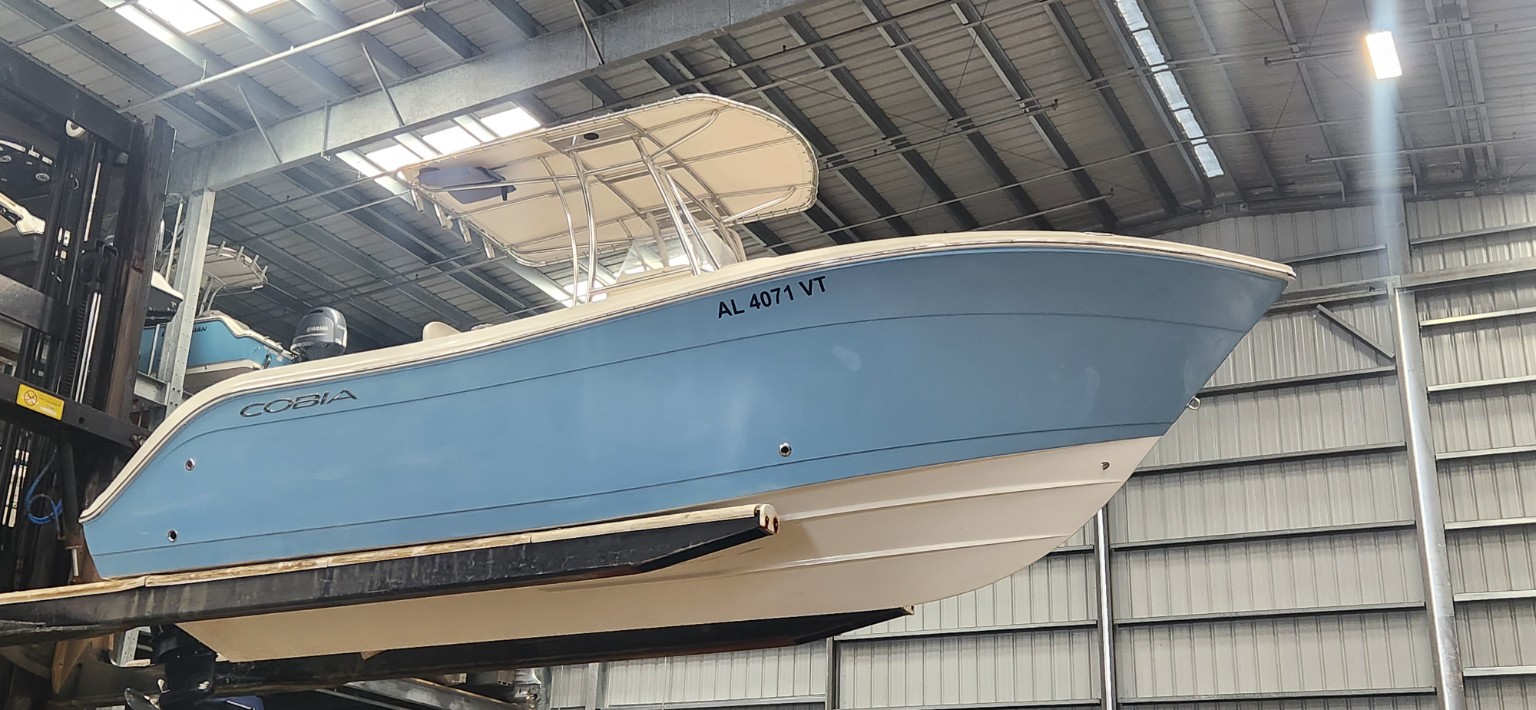
Boat-lift bunks must support strong areas of the hull while keeping strakes, steps, transducers, trim tabs and through-hull fittings clear. There is no dependable one-size spacing because beam, deadrise and internal structure vary by model. Start with the boat and lift manufacturers' guidance whenever it is available.
The bunks should contact the hull evenly and guide the boat into the same centered position each time. Support placed too far inboard can make the boat unstable; too far outboard can overload flatter sections or interfere with chines. The bow and stern also need enough support that the hull is not hanging beyond the bunks in a way the builder did not intend.
Set height with the lift lowered and approach slowly while an observer watches clearances. Check that the engine, skeg, trim tabs and transducers remain clear through the full lift cycle. Never place anyone beneath a suspended boat, and use rated components rather than improvised lumber or hardware.
Reinspect after the first several uses. Carpet compression, loose fasteners or an uneven cable can change how weight is shared. If the hull shows pressure marks, the boat leans, or one bunk carries noticeably more load, stop and correct the setup before damage becomes expensive.