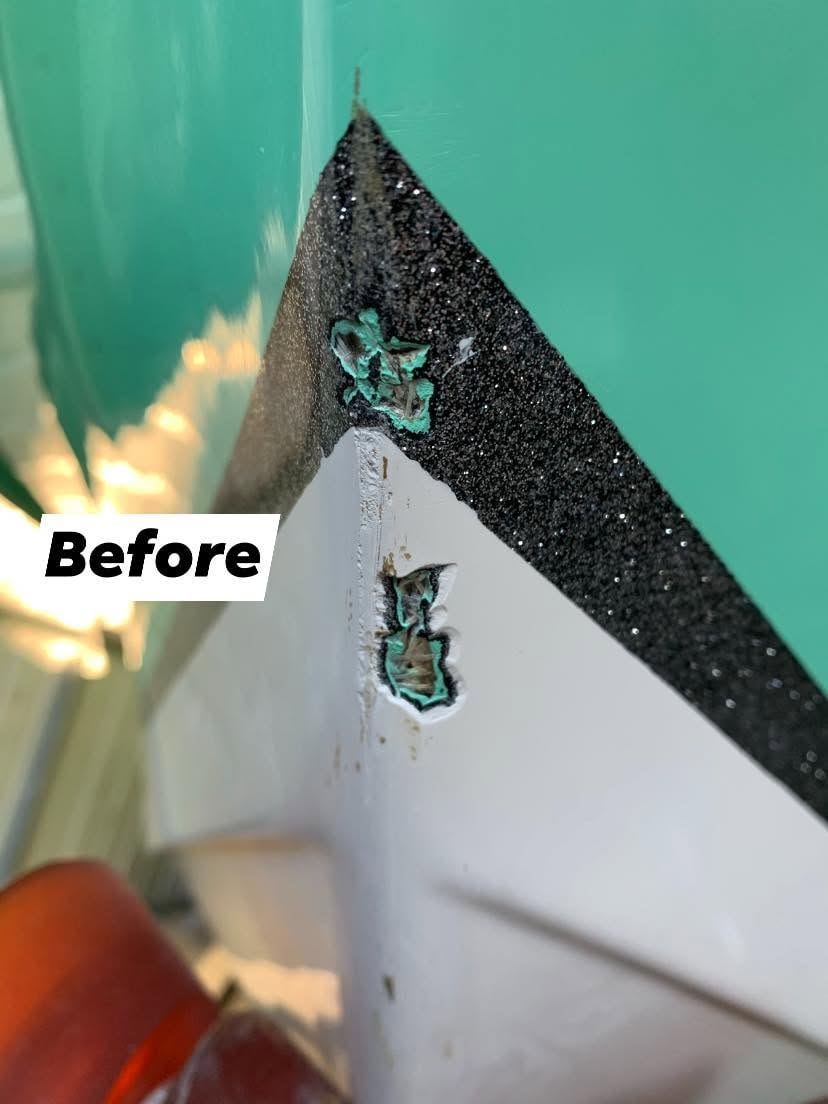
Gelcoat protects the fiberglass laminate and provides the boat's finished surface, but it is not immune to impact, ultraviolet exposure or water intrusion. Rinse salt promptly, use marine-safe products and keep a protective finish on exposed surfaces. Repair chips and cracks early, especially below the waterline or around hardware where moisture can reach the laminate.
Stress cracks deserve more than a cosmetic cover-up. Their pattern and location can indicate flexing, loose hardware or an overloaded structure. A repair should address the source before the surface is refinished; otherwise the crack often returns. Boats stored continuously in the water also need inspection for osmotic blistering, which can require extensive drying and laminate repair.
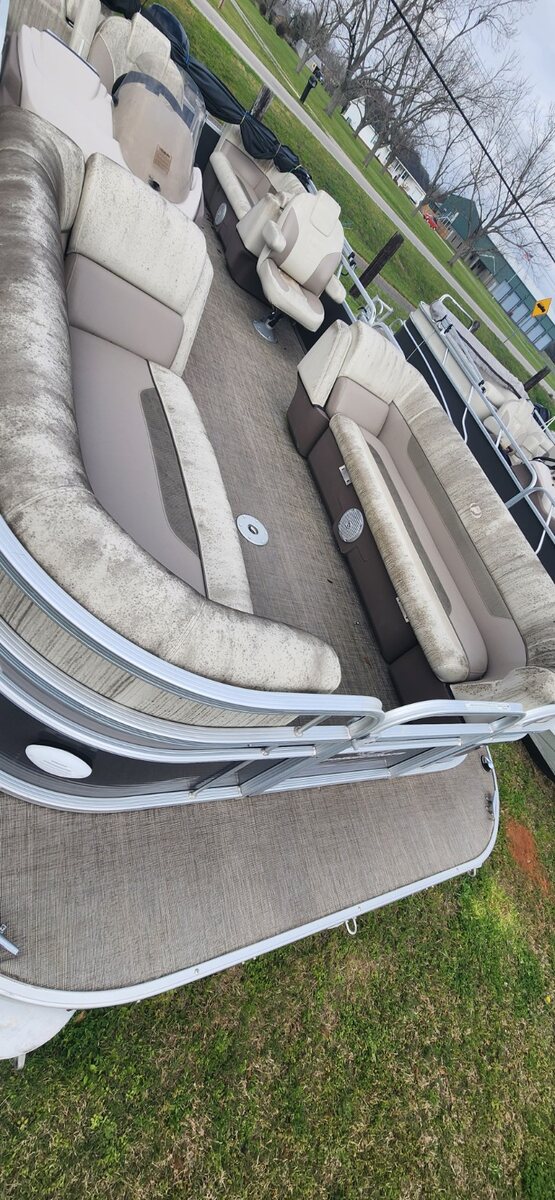
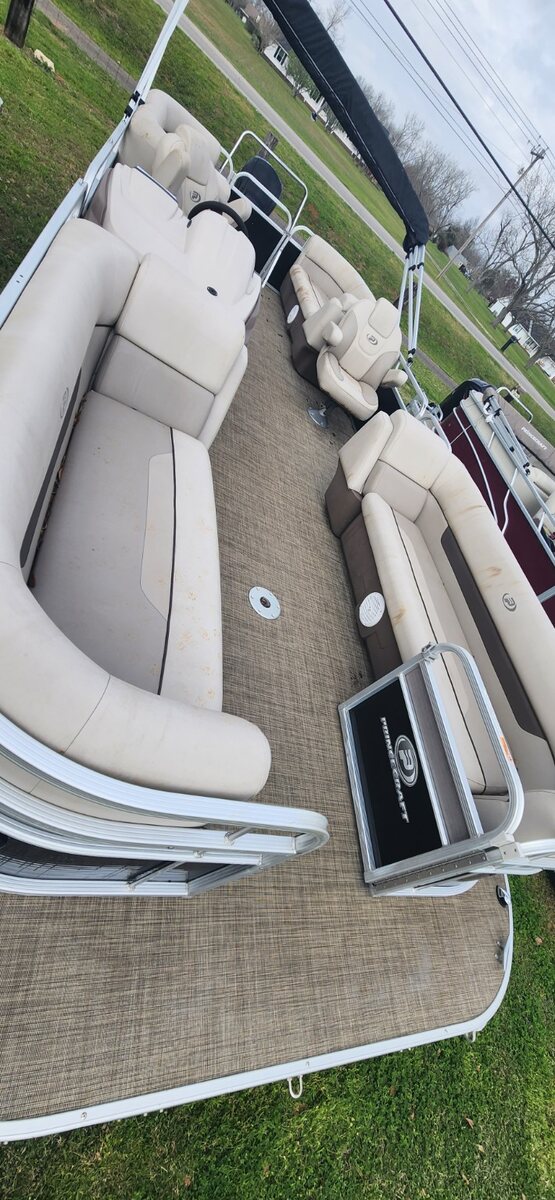
Vinyl upholstery lasts longer when dirt, sunscreen, fish residue and salt are removed with mild soap and water before they bake into the surface. Avoid household bleach mixtures, harsh solvents and abrasive scrubbers unless the upholstery manufacturer specifically permits them. Dry the seats and ventilate the boat instead of sealing damp cushions beneath a cover.
Mold and mildew are moisture problems before they are cleaning problems. Improve airflow, fix leaking covers and keep drains open. Test any cleaner on an inconspicuous area and never mix chemicals. Once vinyl coatings, thread or foam are damaged, aggressive cleaning can make the failure worse and replacement may be the only dependable correction.